World Governments Watch Australia for Outcome of Social Media Ban
Elizabeth Delaney

Audio By Carbonatix
By Elizabeth Delaney, Crosswalk.com
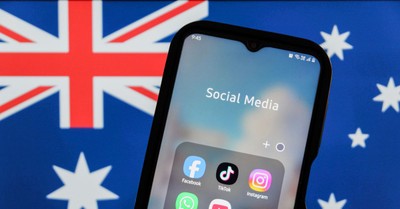
Last week Australia became the first country to take the bold step of implementing a social media ban for minors. Kids under the age of 16 had their social media accounts deactivated on platforms such as TikTok, Instagram, Snapchat, X, Reddit, and Facebook, to name just a few, according to WNG.
Australia’s Communications Minister Anika Wells gave a deeply moving speech in which she acknowledged a movement started by Australian parents who were fed up with having their children mentally and emotionally kidnapped by social media platforms, and algorithms designed by platform creators with the intent of being addictive to teens.
In a 2025 study that Australia conducted, it was discovered that 96 percent of children between the ages of 10-15 used social media content, and that seven out of 10 of them had been exposed to content that was harmful. Over half of them were victims of cyberbullying, to name just a few of the discoveries, according to the BBC.
Hundreds of Thousands of Australian Parents Speak Out
When Wells opened her speech, she made a point of acknowledging “the hundreds of thousands of parents who campaigned for this law, NewsCorp’s Let Them Be Kids campaign and Wippa and the 36 Months group.”
It was the hard work, persistence, and determination of these courageous parents who were able to make their voices heard by Australian lawmakers. The lawmakers in turn then made a point of creating the legislation that would serve as a platform to begin a long journey of protecting Australian children.
“…Australia will become the first country in the world to ban under-16s from having social media accounts. With one law, we can protect Generation Alpha from being sucked into purgatory by predatory algorithms described by the man who created the feature as ‘behavioral cocaine.’ Through one reform, more kids will have their time back to learn an instrument or a language, or walk their dog, master a torpedo punt or the perfect lob pass,” she said.
She referenced only a few of the reports she said she has seen, which apparently revealed that social media platforms were damaging to the mental health of children and teens, and were created with the intent of being addictive to them.
“Most parents, carers,and teachers I talk to don’t expect perfection,” Wells said, “but what they do say to me is ‘thank you for trying this – do not back down!’”
A few of several ways that social media platforms are being told they must make certain underage minors aren’t getting accounts include age-verification via online activity, account surveillance, and uploaded materials, according to CNBC. If social media platforms violate any of the rules laid out by the Australian government, then they will incur fines of over $30 million, according to WNG.
Creating a Supportive 3D Community of Kids
Dany Elachi, a Catholic father of five, is one of those hundreds of thousands of parents to whom Wells was referring who helped get the law passed. After he and his wife gave a phone to their 10-year-old daughter, they quickly saw “how that device transformed her childhood,” Elachi told Catholic News Agency (CNA).
“It left her with little time to play, to connect with siblings and us, her parents, to read, and to rest. It even intruded on her sleep time,” he said, adding that it also interfered with her prayer time.
As a result, the duo started an alliance of parents in their community who wanted to delay allowing their children to have a smartphone and social media accounts. Their intent was that the children would then have a community of supportive friends with whom they could play and enjoy other childhood activities. They eventually named their alliance The Heads Up Alliance.
Response of U.S. and other Countries to Australia’s Social Media Ban.
As the U.S. Congress looked on regarding Australia’s bold move, the question was definitely raised on both sides of the aisle regarding why the U.S. hasn’t done something similar.
“I imagine it's the opposition from the tech industry,” Rep. Ritchie Torres, D-N.Y. told Fox News. “I see social media as a catastrophe for the mental health of the next generation, and I feel like society is conducting an unprecedented experiment on the psyche of young Americans.”
Rep. Ralph Norman, R-S.C. told Fox News that he believed people were unaware of the dangers, which have been underreported. He also said he believes the dangers “have gotten worse.”
“I do think more congressional action would be wise,” Rep. Dusty Johnson, R-S.D., told Fox News Digital. “Obviously, we're a country that values freedom, and so a lot of people feel like that would be either power better exercised by the state, or power better exercised by parents.”
At the same time, Johnson admitted that, “We need to hold some of these platforms accountable,” and that, “they have technological tools that they could very easily use to keep kids safe.”
“They keep kids locked into reward loops that heighten anxiety, shorten attention spans, and create a constant sense of comparison. I’m also seeing more teens who struggle with face-to-face communication because so much of their social life has moved online,” New York City-based psychotherapist Jonathan Alpert and author of Therapy Nation told The Independent.
Several countries in Europe that are watching Australia’s progress or are already working toward their own bans include Denmark, Norway, Ireland, Spain, France, the U.K., and the Netherlands. The EU has passed a non-binding resolution regarding banning social media for minors, according to The Guardian.
A Few States Attempting to Take Initiative
California Governor Gavin Newsom signed a bill last year that restricts social media platforms from intentionally making feeds available to children without the consent of their parents. Then, in October, he signed a bill demanding that social media apps check the ages of children and display a health warning regarding minors, according to The Independent.
Maryland Governor Wes More began to implement policy last year that limited the kind of data online platforms could collect about children, but tech groups have fought it, claiming that their free speech rights are being hindered by the move, according to The Independent.
Other states that are working toward putting such bans in place include Florida, Virginia, Georgia, Tennessee, and Louisiana, according to The Guardian.
Related Article
4 Ways to Set Limits on Your Teen’s Screen Time
Photo Credit: ©Getty Images / SOPA Images / Contributor
 Elizabeth Delaney has been a freelance content writer for over 20 years and has enjoyed having her prose published in both the non-fiction and fiction markets. She has written various types of content, including Christian articles, healthy lifestyle, blog posts, business topics, news articles, product descriptions, and some fiction. She is also a singer-songwriter-musician. When she is not busy with writing or music, she enjoys spending time with friends or family and doing fun social activities such as hiking, swing dancing, concerts, and other activities.