Ian Morgan Cron | Chasing Francis | Steve Brown, Etc.
Ministries > Steve Brown, Etc. with Steve Brown
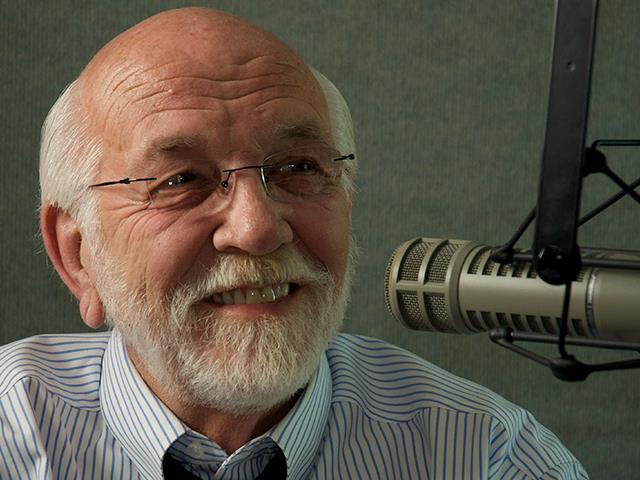
Did a novel from 2006 predict our current spiritual crises? This week, Steve and the gang chat with author, priest, and psychotherapist Ian Morgan Cron about his prescient fiction and, more important, how we address these problems.
The post Ian Morgan Cron | Chasing Francis | Steve Brown, Etc. appeared first on Key Life.
Guest (Male): Yet another novel from 20 years ago predicts the spiritual crisis of today. Let’s talk about it with Ian Morgan Cron on Steve Brown, Etc.
Guest (Female): He’s an old white guy, an author, broadcaster, and seminary professor who’s sick of religion. And he’s brought friends. Please welcome Steve Brown, Etc.
Steve Brown: Hey, we’re so glad you’re here. You always have a place at our table. We just don’t let you talk. In case you’re wondering, I’m Steve, the aforementioned old white guy. Matthew Porter, our executive producer, is here. Matthew is an Enneagram Type 8, but he’s recently lost some weight, and he’s down to Type 7. I’m impressed. Our producer, Jeremy, is in the little glass booth. Jeremy appreciates a good white wine. His favorite white wine is this Trader Joe's Two-Buck Chuck. Our one-man IT department, John Meyer, is in the tech bunker. John recently got us new office phones, but then I remembered that old warning: Beware of geeks bearing gifts. We’re never going to learn that. Dr. George Bingham is the president of Key Life. George says no matter what food or product you purchase, it’s a lifetime supply if you’re old enough.
Dr. George Bingham: I ought to get a discount.
Steve Brown: Kathy Wyatt is the soft feminine side of the program. The day this show airs will mark 50 years that Kathy has been my associate. I feel like I should have baked some cupcakes or something.
Kathy Wyatt: Thank you for not doing that.
Steve Brown: Everyone is grateful for that. We have a great guest today, and it’s going to be an interesting time. Ian Morgan Cron is a bestselling author, psychotherapist, Episcopal priest, and podcast host of the popular podcast, Typology. Ian’s latest book, which I hold in my nicotine-stained fingers, is titled *Chasing Francis: A Pilgrim's Tale*. Ian, I’ve been reading this book this morning and I found me in it. I’ve been there. I can remember midnight crying in my study in the church and saying, "I’ve got to do this the rest of my life and I don’t know if I can do it." By the way, I didn’t have to go through all of the stuff that so many others went through. Jesus came to me that night and fixed it. That’s why I’m a spiritual giant today. Actually, He did show up, and I really sensed I didn’t have to do this anymore. The next day, without having a job, which is stupid, I resigned from the church and walked. I spent the next year going down some of the roads that you talk about in the book, *Chasing Francis*. When you first wrote the book, I suspect some things were beginning to go south, but nothing like 20 years later. Did you have a feeling that you were a prophet?
Ian Morgan Cron: Gosh, no. I thought I was a knucklehead. I was 44 years old. I was leading a non-denominational church that I had started and grown to about 800 people in Greenwich, Connecticut. That’s a big success. Here in Nashville, where I live most of the year, 800 people is a small group, but in Connecticut, it’s legit. At the time, I was following in the footsteps of a lot of these very charismatic, CEO-style pastors trying to grow large churches. Yet, I felt this incredible sense of disease and unhappiness. I felt my life had become more lights-camera-action than Father, Son, Holy Ghost. I had a Roman Catholic upbringing, so there was this part of me that was naturally inclined toward a more spacious, contemplative, sacramental kind of life. There was a lot of internal dissonance and unhappiness. I was meeting constantly with people who felt the same way as I do today. They would describe the kind of Christian they wished they could become, and I realized one day, because I had that Catholic background, that you’re just describing Saint Francis of Assisi. I thought, "What an interesting kind of thing to chase down and write about." The road to the future runs through the past. Eventually, I left that church, became an Episcopal priest, moved on to writing about the Enneagram in a book called *The Road Back to You*, and it’s been a great adventure ever since.
Steve Brown: I know a lot more after your book, but I knew something about Saint Francis. In fact, in our backyard, we have a statue of Saint Francis in the garden. Sometimes birds land on his shoulder and I smile and I want to be like that. I realize that you’re out of a Catholic background. You know something about the contemplatives and probably knew something about Saint Francis. Was that like coming home?
Ian Morgan Cron: A little bit. When people ask me what kind of Christian I am, which is a strange question when you stop to think about it, I would say that I’m a conflation of contemplative and British evangelical. I love the sacramental Eucharistic life. At the same time, when I wrote the book, I feel like there was this pull toward that life that I wasn’t living and that was authentic to me. I was a broken guy at the time. I was really struggling. Tolkien says sometimes we think that we’re going through something catastrophic, but it turns out to be eucatastrophic. In other words, it’s a good catastrophe. I was going through what they now call deconstruction in a way that ended up becoming the best opportunity for reconstruction I could get my hands on.
Steve Brown: What did you say to your congregation? Did you make an obscene gesture and say, "I’m out of here," or did you try to explain it?
Ian Morgan Cron: It was a hard goodbye because it lasted about five years. I would just encourage everybody: If you’re going to say goodbye, just say goodbye. Don’t do it over a long period of time. It was a painful exit where a lot of good people did a lot of dumb stuff, including myself. Maybe I was at the front of that parade, but I lived and learned. I wish I knew things then that I know now, but that’s how life goes.
Steve Brown: When I did that, I fell apart in the pulpit. I couldn’t get through it. That’s when I discovered if you think of somebody who ticks you off big, you can get through that kind of emotional goodbye. If you let it get to you, you just have to sit down and sob. That was a hard time. I don’t want to go back. What did Tolkien say it was?
Ian Morgan Cron: A eucatastrophe, a good catastrophe, like the cross is a good catastrophe.
Steve Brown: I do too. In fact, maybe that has a macrocosm element to it. Maybe it applies to the entire church. Maybe it applies to the country. Maybe it applies to some of the things that we complain about and preach against in our churches. Maybe it’s that kind of thing that’s happening right now. You think?
Ian Morgan Cron: I’m now at 65, the kind of guy who says, when someone comes to me and says, "That’s terrible that that happened to you," I say, "Maybe. I don’t know yet." I’m not quick to label good or bad. I’m like, "You don’t know what’s going to happen. I don’t know the end of the story yet." It might turn out differently than I think, so I’m going to just be patient.
Steve Brown: I’m older, a lot older than you are. When they come to me and say that, I say, "Run as fast as you can." You’ve got to get this book. We’ve been kidding around in this segment, but this is a profound book, *Chasing Francis: A Pilgrim's Tale*. If you sometimes wonder, this is going to help.
Jeremy: Whoa, this place is huge. Welcome to The Vault, your home for classic sermons from Steve from the 90s, the 80s, even all the way back to the early 70s. The Vault is a one-of-a-kind online experience where you can explore more than three decades of grace-filled messages. Get the details and check out our free audio sample at keylife.org/vault. That's keylife.org/vault.
Steve Brown: Hi, this is Steve Brown. One of the main reasons Key Life exists is to remind believers that God isn't mad at His children. Why am I telling you this? Because our weekly email, Key Life Connection, takes the best of the videos and articles and puts them right in your inbox. We’d love for you to try it. It’s free. Go to keylife.org/subscribe.
Steve Brown: Hey, thanks for joining us. We’re talking to author, priest, and psychotherapist, Ian Morgan Cron. A novel of his from 2006 has been re-released and it’s amazing. The title is *Chasing Francis: A Pilgrim's Tale*. Ian, as Matthew Porter just mentioned, you’ve written a bunch of stuff and there’s non-fiction stuff, but this is a novel. Give us a broad view of what the story covers and some of the inspiration behind that.
Ian Morgan Cron: Initially, I thought I was going to write a non-fiction work about the incredible life of Saint Francis and how he is speaking so prophetically to the church today, not merely the Roman Catholic tradition, but specifically the evangelical Protestant tradition. Then I thought to myself, he’s the most written-about saint in history, so I don’t want to just throw another dusty old non-fiction work into the mix. What I’d rather do is write something that’s narrative and interesting and actually explores a life. Here’s the thing about story, and this is a belief of mine: When the front door of the intellect is closed, the back door of the imagination is always open. If you want to sneak truth into people’s lives, tell a story. Don’t just give propositional ideas that they can just give intellectual assent to. It’s so subversive to write a story. What is the story? It’s the story of a pastor leading an evangelical mega-church. He becomes dissatisfied, restless, and uneasy. There’s a death of a child in the church that completely pulls the rug out from underneath all of his very neat and tidy theology. He goes to Assisi, Italy, with his friar uncle, who’s a black sheep in this family. His uncle says, "I know someone who can put your faith back together and give you a vision for the church that is going to rock your world." He goes and he discovers that the person his uncle wants to introduce him to is an 800-year-old saint. He was thinking maybe a spiritual director, but it turns out to be a dead guy. Anyway, he discovers that Francis rebuilds his faith in the same way that Francis is credited with rebuilding the church in the 13th century.
Steve Brown: That is so good. We’re in trouble, aren’t we? Talk some about that and the connection that we need to somebody like Saint Francis.
Ian Morgan Cron: It’s actually startling the parallels between where the church was at in the 13th century and where the church is at today. Francis is credited widely among historians as single-handedly repairing Christendom in the 13th century. It was on the brink of collapse. It was hemorrhaging credibility. Artists and street musicians sang songs mocking and ridiculing the church and its leadership. It was really gasping. We find ourselves today with abuse scandals across denominations. Trust in institutional religion is at an all-time low. Entire generations describe themselves as spiritual but not religious. In the 13th century, the church had become dangerously entangled in power politics and the Crusades, supporting war. The church was a political big player. In today’s world, we find ourselves dangerously entangled in the political realm and mixing of kingdoms in a way that I think is very questionable. There was the commercialization of Jesus in the 13th century. You had selling pardons, ecclesiastical offices, relics. Today we find ourselves with a McDonaldized Jesus with our hit music and huge churches and the commercializing or trivializing of Jesus in that way. I could go on and on: neglect of the poor, civilization consumed by greed and consumerism, our relationship with creation. He is the patron saint of ecology, by the way. You talk about an early voice saying, "Hey, we’ve got to pay attention to the world that our Father made." The key is that he single-handedly reversed the downward momentum of the church. We have to be able to say, wait a minute, maybe he’s got something to teach us about what it means to be a follower of Jesus in the contemporary world in such a way that it would bring repair to our broken houses. I just think it’s so fascinating how he did it. How he did it wasn’t a strategy or a program. He did it through modeling a life that inspired thousands and thousands of people in his time to abandon their livelihoods and their lives to go out and preach this gospel.
Steve Brown: I’m reminded that God never leaves His church bereft of Himself. Augustine said that the church was a whore, but she was his mother. As a cynical old preacher, I understand that. I’ve seen the worst, and in the worst, I’ve seen Jesus. I’m cynical, but in the midst of the cynicism mostly about myself, I’ve seen the fact that Jesus really loves the church and He doesn’t leave. He brings people like Saint Francis and Ian Cron into the church to speak quietly and clearly about the reality that’s behind all of the nonsense. As you worked on this, did you change anything that was in the original?
Ian Morgan Cron: When Zondervan HarperCollins came to me and said, "Hey, we think this book is more relevant now than when you wrote it. We feel like the message of this book is more prophetic," I went back and reread the manuscript for the first time in 20 years. I realized there’s nothing in the actual story itself that I can change or would change. The updating was really around an author foreword and also a very good study guide in the back that really helps people to process and integrate the material into their own lives.
Steve Brown: You’ve got to get this book. If you go through periods when you wonder if this stuff is true and, more importantly, if it’s true for you, if you had a lot of gasoline when you started but the car is beginning to huff and puff, if sometimes you think I’ve been kidding myself all these years, you’re going to find this book is really refreshing. It's called *Chasing Francis: A Pilgrim's Tale*. You can get it at any good bookstore, and if they don’t have it, do not patronize them. Like Jesus, we’re coming back.
Kathy Wyatt: Hey, thanks for listening to Steve Brown, Etc. If you’re enjoying the show, would you help us let others know about it? You can share a link, click subscribe on our YouTube channel, or drop us a review on your favorite podcast platform. Thanks much.
Steve Brown: Hi, this is Steve Brown and I’m excited to tell you about a new offer from Key Life called *Living with Steve*. I travel with you wherever you go. If you need an entertaining conversation or even a sermon, there I am. That’s the good news. The bad news is that it costs a million bucks. But wait, there’s good news. You can get everything I’ve just described with the Key Life app. And for a limited time, it’s not a million dollars, it’s free. Try it now at keylife.org/app.
Steve Brown: Hey, thanks for joining us. We’re hanging out with author, priest, and psychotherapist, Ian Morgan Cron. By the way, you can keep up with him at ianmorgancron.com. If you can’t spell Morgan, you went to modern university. Ian, we started talking some off-air that there’s certainly been a trend toward mega-churches not feeding the flock as deeply as they need, and then some people drifting from that to a "not religious but spiritual" self-definition. Then it does seem like we’re beginning to see trends, especially young adults, toward being drawn toward church again, especially the more liturgical type churches: the Episcopal, Catholic, even Lutherans, amazingly enough. Talk some about that. Would that be consistent with your observations and how would Saint Francis and the model of Saint Francis help with that?
Ian Morgan Cron: I see it dramatically. It’s very interesting to see how many young men are being drawn to the Eastern Orthodox tradition and also to the Roman Catholic tradition. Part of it is people are tired of a vapid gospel that is being presented to them that is more of a self-help kind of gospel than it is one that is rich and deep and that is not so concerned with the explicit meaning, although that's important, but the implicit meaning of our faith. Let me give you an example of this. I’m out with a pastor one day, a Bible church guy, and he's bemoaning stuff. I said, "You ought to do the Eucharist every week." He looked at me like I was crazy because to him that’s like broccoli; I’ve got to do it every now and then but I don’t really want to. I said, "Well, have you read the road to Emmaus?" Jesus is preaching the Word at them over and over again and they don’t recognize Him. He’s right there with them and He’s given them the Bible verse after verse, and they still don’t get it. It’s when He breaks the bread that suddenly their eyes are opened. I think there’s an imbalance here. We threw out so much in the Reformation around sacramentalism. According to the Gospels, there has to be a twinning, a marrying of these things. The gospel is explicit in its message, particularly Paul, but then you have the implicit, which is about mystery and transcendence and receiving truth in a way that gets into your body and blood because it’s experiential. So yeah, I see a zillion former self-identified evangelicals at our Episcopal church every week. You see them take the Eucharist for the first time with tears streaming down their face like, "Oh, now I get it." So I think we have so much to learn from Francis, who was very Eucharistic in his approach to the spiritual life.
Matthew Porter: Ian, this thing of the mega-church, I see the problems. You get to a certain size and then the human ego is inescapable. It’s not an academic thing to me. We started going to a church seven years ago and it was tiny, it met in a high school. While we weren’t looking, it kind of became a mega-church. Is it a categorical problem with that model? It’s like there’s something everybody likes and then that restaurant gets big, and now we’re going to Applebee’s, the Applebee’s of churches here. Does it get a certain size and you’re like, "Okay, we’ve got to break this up into smaller churches?" Is the size of it the root of the problem?
Ian Morgan Cron: I think the problem is multi-layered. I don’t want to paint too broad a brush here; there are good and faithful people in those churches, but it is loaded with the potential for problems. We’ve seen the fallout of that almost weekly. The human ego is a very sneaky little creature and very smart. I feel like the attraction that young people have to some of these old historical traditions is like there’s a depth, there is a theological richness, and there is continuity over time in a time when everything feels like it’s moving and shaking. Guess what? There is an old way and we should pay attention to it.
Steve Brown: That’s good stuff. Of course, there are problems with the old way too.
Ian Morgan Cron: Of course. There’s problems whenever you put five people together in the same room. Come to my condo association.
Steve Brown: Ian, I have an authority problem and I’ve got to say the other side too. I’m not even going to say what I’m thinking. You’ve got to get this book because it’s real and it’ll make a difference. It’s called *Chasing Francis: A Pilgrim's Tale*. If you’re on a journey and the destination looks a long way off, this is your book.
Guest (Male): Hello, this is Pastor Jerry Kuparys again and I’d like to take a moment to ask you to pray for and give to Key Life. When you pray, ask for wisdom and blessings and that Key Life will continue to spread the message of God’s grace for many, many years to come. And if you can give, please give as generously as you are able. We will be faithful with every gift, big or small. Thank you.
Guest (Male): When Christ promised we could live life to the full, He didn’t just mean eventually in heaven, because Jesus didn’t come to save us from our humanity, but to restore it. Life with a capital L. Find it now on keylife.org/store.
Guest (Male): What if you could start your day by hanging out in God’s Word and with some of the most significant theologians, authors, and pastors ever? That’s the idea behind the one-year devotional, *God With Us*. Find it now on keylife.org/store.
Steve Brown: Hey, thanks for spending time with us here. By the way, if you ever get up on Mondays feeling discouraged, may I suggest you either read *Chasing Francis: A Pilgrim's Tale* or from our perspective, may I suggest our weekly email? It’s called Key Life Connection. It’s free, so you can’t complain. Every Monday morning, it’ll be waiting for you in your inbox to remind you that God isn't mad at you. Go to keylife.org/subscribe. Try today and if you do, you’ll get three free sins.
Kathy Wyatt: Wow, that was a lengthy self-promotion.
Steve Brown: I didn’t write it. I read it. Ian, in the very first segment, you used the term when you were talking about the 13th-century church; you said that it was hemorrhaging. I suspect that there are folks that feel the same way about the church today. Do we see the church as having any credibility at this point? For those people who are concerned about the church and its credibility but say, "I love Jesus, but I don’t like the church," what do we do? Where do we go? How do we navigate that road?
Ian Morgan Cron: If you love Jesus and are struggling with the church, then you need to read *Chasing Francis* and learn about this guy because he had the same stuff going on inside of him. Augustine’s great quote that the church is a whore, but she’s my mother; we all live in this kind of tension with the Body of Christ. It is a perpetual disappointment to us, and yet, it is the communal embodiment of Jesus’ presence on Earth. He has not abandoned it. The church has done and continues to do beautiful, wonderful things. They just don’t get press because they’re not very sexy to talk about. It’s much more sexy to talk about fallen pastors in the media than it is to talk about the wonderful things the church is doing. That said, we have to be continually and prophetically self-critical in order to become a better expression of the living Christ in the world. I feel like that’s the reason for writing *Chasing Francis*. It’s not because I’ve got a bone to pick. I’m not mad at the church. As I said to you during a break, you put five people in a room, weird stuff is going to happen. We are broken human beings and we do broken, dumb, broken human stuff when we get together. If you're disillusioned, it's because you had an illusion. You've got to own that. Go to my condo association, I'll show you five people acting badly. We have to be adult and say, look, it’s a fallen body. At the same time, it needs regular reality checks, and people like Saint Francis give it to us.
Steve Brown: I think that circles back to what you were saying about the eucatastrophe. A crisis of faith might not be the worst thing in the world. That might be the gift you needed but didn’t want. Address the person who’s going through a crisis of faith and thinks, "This is it. I’m going to leave the faith."
Ian Morgan Cron: I’ll borrow a model. You grow up in the evangelical church and you’re given a thesis about the way the world is. Then you have an experience and begin to have questions and doubts. All normal stuff. Good stuff, actually. Then you go from thesis to antithesis. Now all you’re doing is complaining about the church and you’re bitter and you’re deconstructing. Hopefully, you don’t get stuck there because a lot of people do. What you want to do is move from thesis to antithesis to synthesis. Synthesis is where you say, "Okay, here’s what I learned from this group. Not all of it was great, but I’m going to take that which was better, marry it to what I’ve now learned about the world, and come to a synthesis." I hope that I go through that process multiple times in my life.
Steve Brown: That’s good stuff. I grow tired of some of the books that are being published. They’re just people who got their underwear on too tight and they're angry about everything and think the world revolves around them. It’s refreshing to listen to you. You probably have stories about church that are so dark and so negative and so broken that you could write one of those angry books. But instead, you didn’t. Was that a conscious choice, intentional?
Ian Morgan Cron: I’ve been around 12-step recovery since 1987. I’m a recovering alcoholic and addict. I’ve learned more about grace and love and community in 12-step rooms that continue to give me hope for what happens upstairs, not in the basement of the church where 12-step meetings take place. My participation in those organizations has really stripped me of my self-righteous anger. I have so much more compassion and empathy and hopefulness that broken people can be healed through grace. I just hope that message continues to go upstairs from the basement where AA and NA and all these groups meet. In Alcoholics Anonymous, very often the closing prayer is the prayer of Saint Francis.
Steve Brown: I’ve got about 30 more questions. If you don’t have anything to do, would you stay around and talk to me for a while? Actually, I need a counselor and some therapy to kind of fix my Enneagram. Listen, this has been great. It really has. And this book is a really important book. You guys ought to get it. It would be a great book for a small group in your church, whether you’re in a mega-church or the Catholic church or a liturgical church. Even Lutherans could get some help. Kathy’s been PCA for years and she converted to become a Lutheran and we don’t ever hear the end of that.
Kathy Wyatt: You’re the one that brings it up all the time!
Ian Morgan Cron: She’s like someone who just gave up smoking. They just can't stop talking about it. Smoking Nazis.
Steve Brown: Ian, you’re a delight, and we very much appreciate your spending this hour with us. We love you and we love the work that you’re doing. You’re making a difference. Don't shilly-shally, okay? Bless you.
Ian Morgan Cron: Thanks, Steve and friends. Thanks again. It was wonderful to be with you.
Steve Brown: Hey, we’re going to tell you who we’re going to do it unto next week. Don’t go anywhere.
Guest (Female): Hey, thanks for listening to Steve Brown, Etc. If you’re enjoying the show, would you help us let others know about it? You can share a link, click subscribe on our YouTube channel, or drop us a review on your favorite podcast platform. Thanks much.
Guest (Male): What if you could start your day by hanging out in God’s Word and with some of the most significant theologians, authors, and pastors ever? That’s the idea behind the one-year devotional, *God With Us*. Find it now on keylife.org/store.
Pete Alwinson: This is Pete Alwinson, and if you’re a guy, I want to show you how to recover and reclaim an intimate growing relationship with your heavenly Father. Check out *Like Father, Like Son: How Knowing God as Father Changes Men*. Available now at keylife.org/store.
Steve Brown: Believer, I want you to remember that where sin abounds, grace does much more abound. And you will run out of sin before God runs out of grace. Grace, the real good news of the gospel. Find it now on keylife.org/store.
Steve Brown: What a great hour. One of the difficulties in only having an hour and being constrained by the clock is that this hour is to get you interested. It’s not necessarily to pursue the topic with great depth. That’s a hard thing to do unless you have a lot more time than we have. But Ian is the real deal. And by the way, in case you ever wonder if you’re one of those who say, "I’m spiritual but not religious," or, "They didn’t speak to me," or, "I got abused by the church," it’s a good thing to remember that the church really isn't our idea. It is the place that God—and it seems to me it was not an all-wise decision—where God decided to be present in the world. The scripture says that Christ loved the church and gave Himself up for her. So when we say, "I love Jesus, I just don’t love the church," if you love Jesus, you love what He loves. I understand leaving before you get hurt because we’re a wild bunch and we’ll talk behind your back and you’ll get hurt. And those of you who are not a part of the church who are angry at the church, I know more stories than you can imagine. Nevertheless, He loved the church and gave Himself up for her. And that’s where God moves. It’s where God acts. It’s where God does things in the lives of people. This is an old guy because I’ve tried everything else and I’ve read all the books. God help me, I love the church and I don’t even know why. But I do, and I think it’s because He does. You want to do something about our culture? Pray, but join a church and support it. You might be surprised at what God does. Alright, who’s going to be here next week?
Kathy Wyatt: Next week, we have our friend Tish Harrison Warren who’s been with us in the past and it’s actually been a while. She has a new book out that’s titled *What Grows in Weary Lands*.
Steve Brown: I can walk down that road. Well, she’ll be an illustration of what we’ve done today on this podcast. You don’t want to miss this. We’re going to be here. And if you really love Jesus, you will be too. Between now and then, don’t do anything we wouldn’t, and that gives you a wide, wide berth.
Related Episodes
Tish Harrison Warren | What Grows In Weary Lands | Steve Brown, Etc.
Sunday, August 9
Scott Sauls | The Mercy King | Steve Brown, Etc.
Sunday, July 19
About Steve Brown, Etc.
A weekly talk show featuring Steve and “the rest.”Key Life exists to communicate that the deepest message of the ministry of Jesus and the Bible is the radical grace of God to sinners and sufferers.
Because life is hard for everyone, grace is for all of us. And grace means that because of what Jesus has done, when you run to him, God’s not mad at you.
All of the radio shows, sermons, books, and videos we produce work together toward one mission: to get you and those you love Home with radical freedom, infectious joy and surprising faithfulness to Christ as your crowning achievement.
Learn more: http://www.keylife.org
About Steve Brown
He’s not your mother and he’s not your guru. He’s Steve Brown - a speaker, author, former pastor and seminary professor, and founder of Key Life Network, Inc.At Key Life, Steve serves as Bible teacher on the radio program Key Life and the host of the talk show Steve Brown, Etc. Prior to Key Life, Steve served as a pastor for more than thirty years and continues speaking extensively.
Steve has also authored numerous books, including How to Talk So People Will Listen, Three Free Sins, Hidden Agendas and his latest release, Talk the Walk: How to Be Right Without Being Insufferable (now available as an audiobook).
Contact Steve Brown, Etc. with Steve Brown
Key Life Network
P.O. Box 5000
Maitland, FL 32794
In Canada, send requests to:
Key Life Canada
P.O. Box 28060
Waterloo, Ontario N2L 6J8
1-800-KEY-LIFE (1-800-539-5433)